There is a dish in Bali that does not shout for attention the way babi guling or nasi goreng do, but once you taste it, it stays with you.
Nasi ulam is steamed rice tossed with a collection of finely sliced fresh herbs, aromatics, toasted coconut, and sometimes flaked salted fish or dried shrimp, served at room temperature as a kind of fragrant rice salad.
It is earthy, complex, and deeply satisfying in a way that feels more like a complete sensory experience than a meal. The food specialists at SatuSatu, a Bali travel platform, put together this guide so you understand exactly what nasi ulam is, where it comes from, and how to find and enjoy it properly during your time in Bali.
What Is Nasi Ulam and Where Does It Come From?
The name comes from two Indonesian words: nasi, meaning cooked rice, and ulam, referring to the assortment of fresh herbs and vegetables traditionally consumed with meals across the Malay-Indonesian world.
The dish is found across Indonesia, Malaysia, and parts of southern Thailand, with each region developing its own variation based on locally available herbs and traditions.
In Indonesia, nasi ulam has roots in Betawi cuisine, the food culture of native Jakartans, and appears in various forms across Sumatra and Bali.
The Balinese version typically incorporates kemangi (lemon basil), which grows prolifically across the island and gives the dish a distinctive bright, citrus-floral note that sets it apart from the Malaysian style.
Other common additions include lemongrass, shallots, kaffir lime leaves, and toasted shredded coconut known as kerisik, which adds a nutty depth and slight crunch.
How Nasi Ulam Is Prepared in Bali
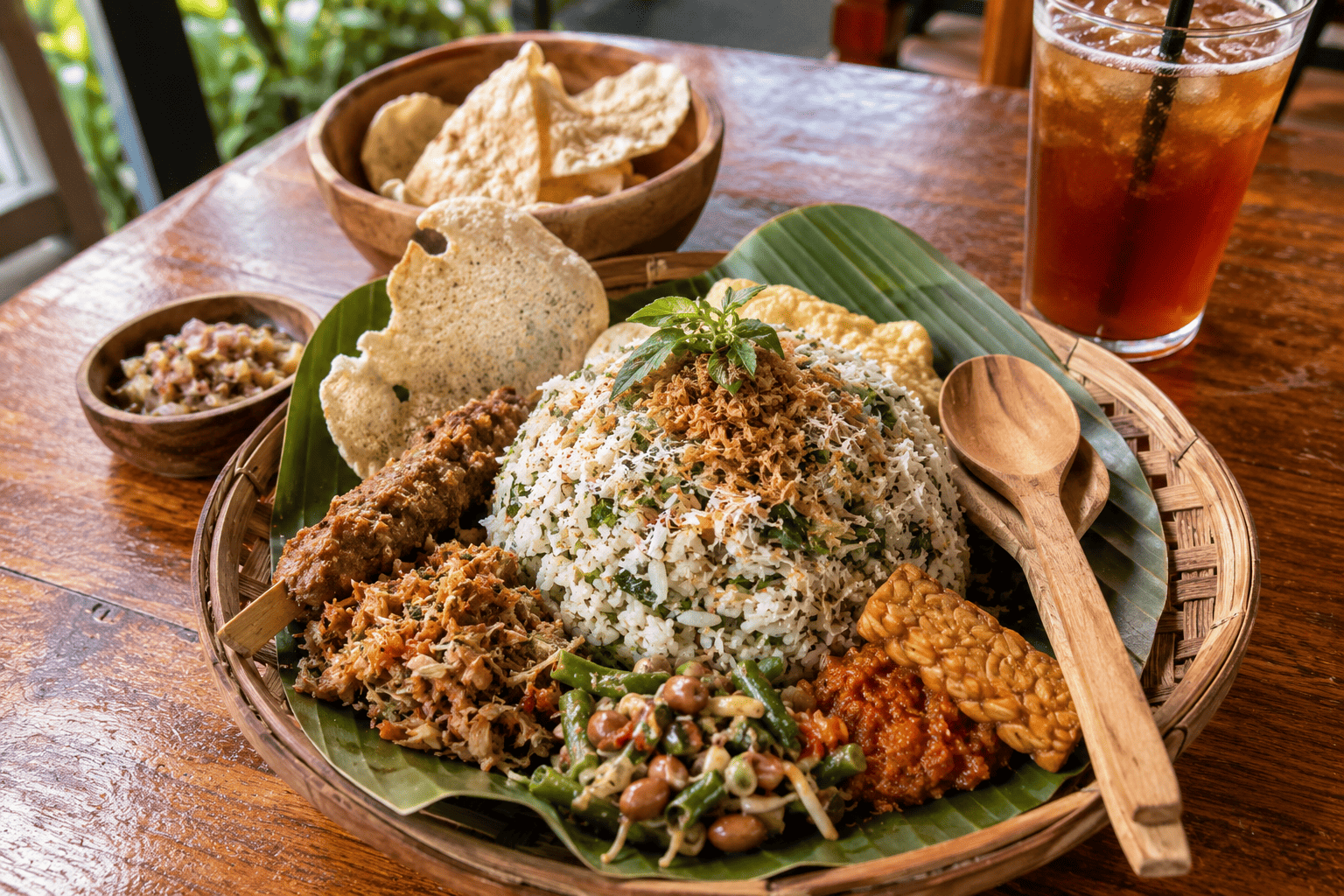
The preparation of nasi ulam is deceptively labour-intensive. The rice is cooked first, then cooled to room temperature before anything else is added. This step is essential: adding herbs to hot rice wilts them immediately and turns the dish bitter and dull.
Once cooled, the finely sliced herbs are folded through along with the aromatics, toasted coconut, and any dried seafood components. The result is a dish where every grain of rice carries the fragrance of the herbs.
In the Balinese context, nasi ulam is frequently served alongside a variety of side dishes, functioning as the rice base of a nasi campur arrangement rather than as a standalone dish.
You may encounter it at traditional warungs serving home-style Balinese cooking, particularly in the Denpasar area and at family-run eateries in central and northern Bali where the old cooking traditions are most intact. It is not a dish you typically find headlining a menu; it is discovered rather than ordered from a billboard.
Key Herbs and Flavors That Define Nasi Ulam
Understanding the herbs involved helps you appreciate what makes nasi ulam distinctive from other Indonesian rice dishes. Kemangi, or lemon basil, is the herb most closely associated with the Balinese version, with its anise-tinged citrus quality lending the dish its signature brightness.
Kaffir lime leaves add a floral sharpness when finely sliced. Lemongrass contributes a grassy, citrus-forward depth when cut thinly. Torch ginger flower, known locally as bunga kantan, adds a perfumed complexity that is hard to substitute.
The toasted coconut component is what binds everything together. When grated coconut is dry-toasted until golden and pounded, it releases oils that coat the rice and create a subtle caramel-coconut richness in the background.
Fried shallots added at the end provide crunch and a sweet savouriness. Some versions include flaked salted fish stirred through, which adds an umami depth that makes the dish feel complete as a standalone meal.
Where to Find Nasi Ulam in Bali
The most reliable places to find genuine nasi ulam in Bali are family-run warungs in the Denpasar area, particularly in neighbourhoods where traditional Balinese and Betawi-influenced home cooking is still practised daily.
It appears less frequently in the tourist-heavy areas of Seminyak and Canggu, where menus tend to gravitate toward nasi campur and nasi goreng for international audiences.
In Ubud, traditional Balinese warungs occasionally serve nasi ulam as part of a rotating daily menu. The key is to ask for it specifically and to visit during lunch hours, as this style of cooking is typically prepared in the morning and served through midday until it runs out.
Arriving early rewards you with the freshest preparation. Cooking classes focused on traditional Balinese cuisine in the Ubud and Denpasar areas also offer the opportunity to learn and taste nasi ulam in its most authentic context.
Why Nasi Ulam Matters as a Culinary Experience in Bali
Nasi ulam sits at an interesting intersection in Indonesian food culture. It is a dish that requires real knowledge and patience to prepare well, which is why it has become less common in commercial settings even as it remains deeply embedded in home kitchens.
Tasting it in Bali means tasting something that connects directly to the island’s herbal and agricultural traditions, the abundance of fresh herbs in Bali’s volcanic soil, and the way food functions in Balinese daily life as sustenance built from what the land provides.
For the food-curious traveler, tracking down a good bowl of nasi ulam and sitting with it at a simple warung table represents a different kind of Bali experience from the beach clubs and cocktail bars. It is quiet, unshowy, and genuinely revealing about the depth of this island’s culinary heritage.
Explore Bali’s Food Culture Further with SatuSatu
Nasi ulam is one small thread in a richly woven culinary tapestry, and there is much more of Bali worth exploring with the right guidance.
SatuSatu is a Bali travel platform that brings together transport, cultural experiences, and curated activities in one place, all bookable directly on SatuSatu.com with support for local payment methods including BCA, Mandiri, OVO, DANA, credit cards, and more.
Arriving in Bali comfortably sets the tone for everything that follows. SatuSatu’s Airport Transfer offers fixed pricing and same-day booking, so you step out of Ngurah Rai into a waiting car without any negotiation.
To find traditional Balinese cooking in its natural context, SatuSatu’s Exclusive Car Charter pairs you with a knowledgeable local driver who can navigate you to warungs and markets well off the tourist trail.
When the sun begins to set, the Kecak Fire Dance at Uluwatu offers one of Bali’s most extraordinary cultural performances at the clifftop Uluwatu Temple, a fitting companion to a day immersed in the island’s traditions.

For a complete Bali experience across multiple days, the SatuSatu Bali All-Access Pass gives you access to 50+ top island experiences in one flexible, high-value package.
Choose from a 1-day pass at $59.95 (IDR 999K), a 2-day pass at $104.95 (IDR 1.799M), or a 3-day pass at $144.95 (IDR 2.499M), and unlock access to 50+ top Bali experiences spanning destinations across the island, from the Kecak Fire Dance at Uluwatu to snorkeling in Padang Bai and wellness and spa experiences across Bali.
Every pass includes a free eSIM and a dedicated Bali concierge to handle all the planning for you, saving you up to 60% compared to booking individually, with 90-day validity from purchaase for maximum flexibility.
FAQ about Nasi Ulam Bali
What is nasi ulam in Bali?
Nasi Ulam is a Balinese herbed rice dish made with fresh herbs, aromatics, and toasted coconut mixed into cooled rice. Common ingredients include kemangi, kaffir lime leaves, lemongrass, and shallots.
Is nasi ulam the same as nasi campur?
No. Nasi Campur is rice served with separate side dishes, while nasi ulam is the rice itself flavored with herbs and aromatics.
Where can I find nasi ulam in Bali?
Nasi ulam is commonly found at traditional warungs in Denpasar and some Ubud eateries that serve rotating Balinese dishes. It’s also featured in Balinese cooking classes.
Is nasi ulam suitable for vegetarians?
Yes, the basic dish is plant-based, though some versions include dried shrimp or salted fish. Vegetarian versions simply leave those ingredients out.
What does nasi ulam taste like?
It has a fragrant, herby flavor with notes of lemon basil, lime leaves, toasted coconut, and mild savory richness. The texture is slightly drier than regular steamed rice.