Most visitors to Bali rush past Klungkung on their way to somewhere else. That is their loss.
This quiet regency in East Bali, centred on the royal town of Semarapura, holds some of the island’s most significant cultural heritage, a coastline that hardly sees crowds, and a sense of everyday Balinese life that feels completely unfiltered by tourism.
The team at SatuSatu, the Bali travel platform, regularly points curious travellers in the direction of Klungkung for exactly this reason it rewards those willing to look a little further than the obvious.
1. Kertha Gosa Pavilion
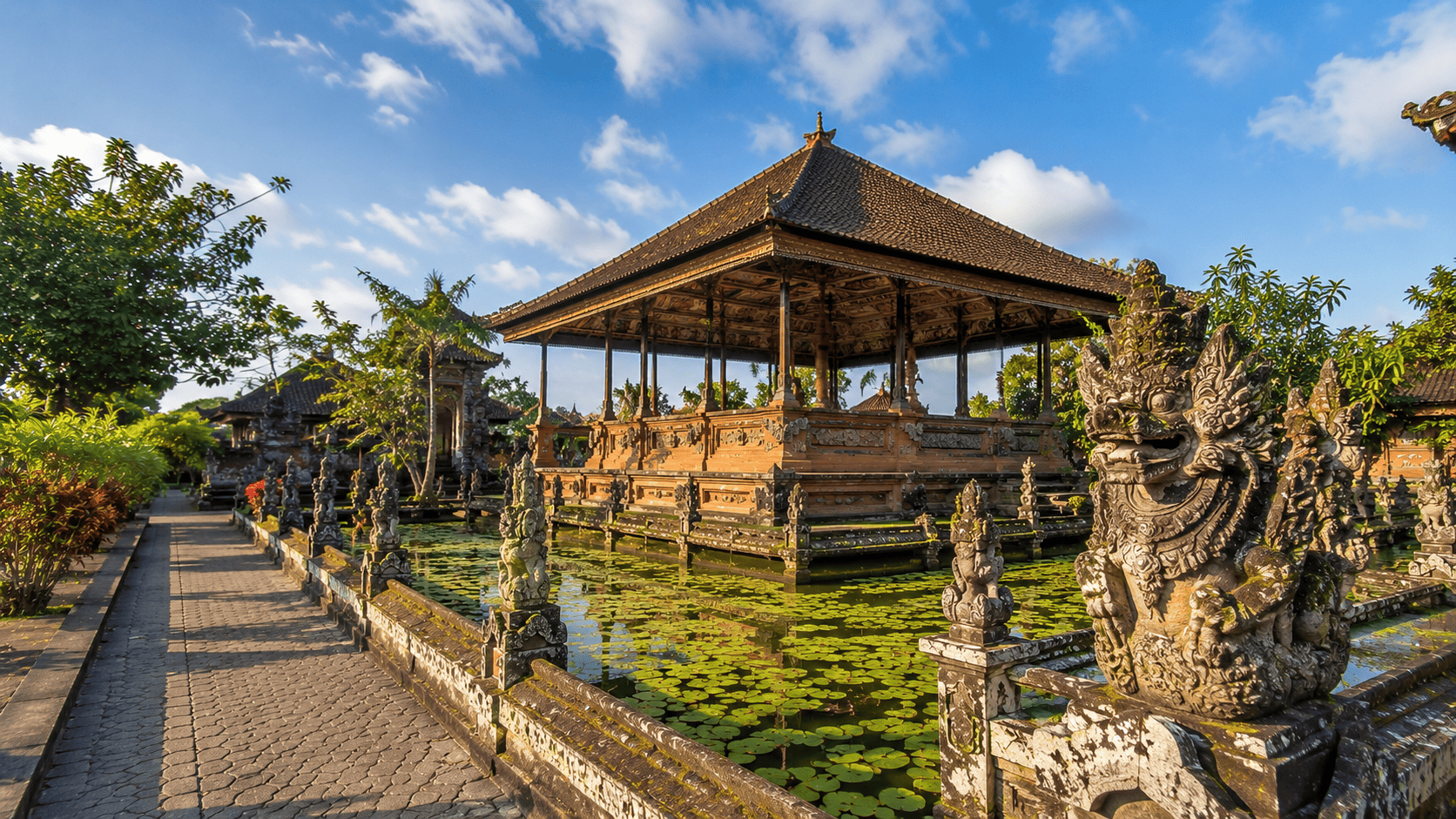
📍 Semarapura Town Centre, Klungkung
💰 IDR 50,000 adults / IDR 25,000 children (5-10 years)
🕐 08:00 – 17:00 daily
👥 Best For History lovers, architecture enthusiasts, and anyone curious about traditional Balinese justice
✨ What Makes It Special A 17th-century royal hall of justice covered in extraordinary Kamasan-style ceiling paintings
The Kertha Gosa is arguably the finest example of traditional Balinese painting still viewable in its original setting.
Once used as the hall of justice for the Klungkung Kingdom, the open-air pavilion is decorated with vivid narrative ceiling paintings in the Wayang Kamasan style scenes drawn from Hindu epics that depict the consequences of virtuous and unvirtuous deeds, with detail that rewards a long, careful look.
The complex includes the Bale Kambang, a floating pavilion set within a lotus pond that gives the whole site a dreamlike quality. Arriving between 8 and 9 in the morning, before tour groups arrive, gives you the pavilion largely to yourself.
2. Goa Lawah Temple
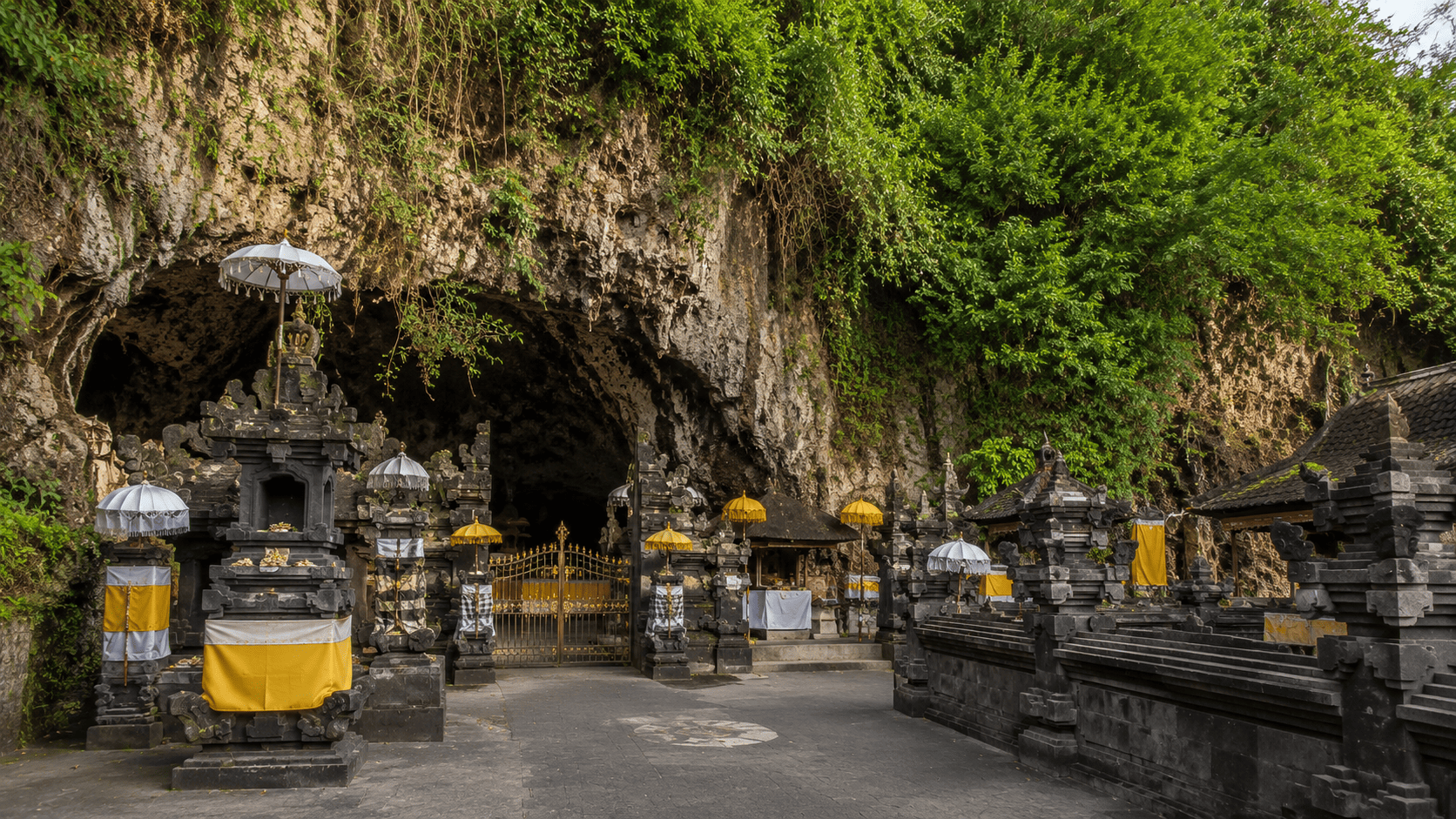
📍 Pesinggahan Village, approximately 14 km east of Semarapura
💰 Donation-based entry; sarong required
🕐 Dawn to dusk, varies around ceremony days
👥 Best For Travellers seeking an active Hindu temple in a genuinely unusual natural setting
✨ What Makes It Special A living temple built around a real sea cave inhabited by thousands of bats
Goa Lawah, meaning Bat Cave, is one of Bali’s nine directional temples (Sad Kahyangan Jagad). The temple is built directly around the mouth of a large cave on the southern Klungkung coast, and inside the cave live thousands of fruit bats visible to the naked eye as a shifting, rustling mass on the cave ceiling.
It is an active site of worship and feels it incense burns, priests conduct prayers, and the cave itself has a presence that is hard to describe. This is the kind of temple that feels genuinely alive rather than preserved, and standing in front of the cave with the sound of the sea behind you is a singular East Bali moment.
3. Nyoman Gunarsa Museum
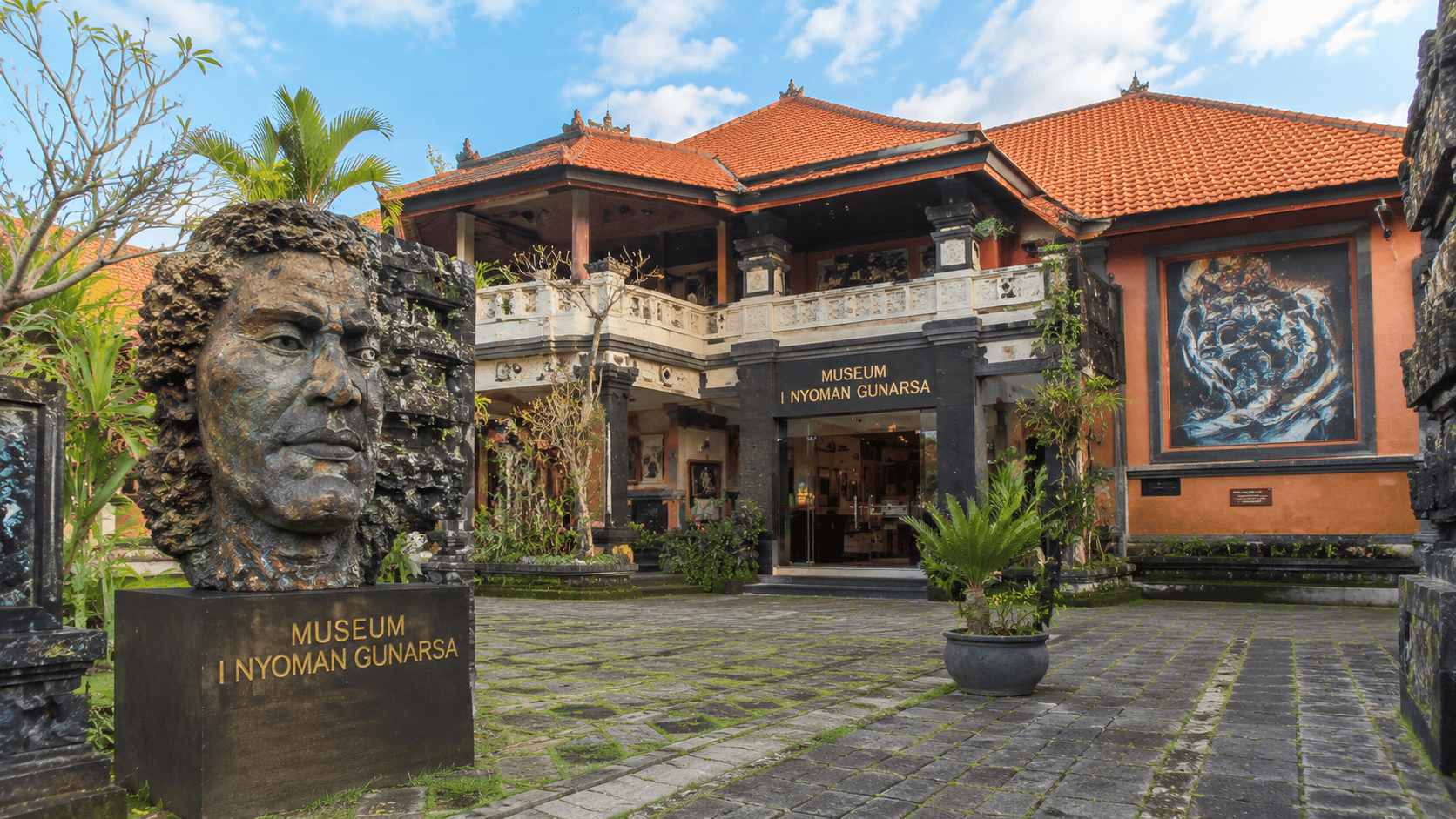
📍 Banda, Klungkung (off Jalan Raya Kp. Banda, Klungkung)
💰 Prices vary; check on arrival
🕐 Open most mornings and afternoons; confirm hours before visiting
👥 Best For Art enthusiasts and those interested in the intersection of classical and modern Balinese painting
✨ What Makes It Special One of Indonesia’s most impressive private art collections, built by a legendary Balinese painter
I Nyoman Gunarsa was one of Bali’s most celebrated painters, known for work that fused traditional Wayang Kamasan forms with modern expressionism. The three-storey museum he established in his hometown displays both classical Balinese art and his own bold, gestural canvases.
Visitors consistently note it as one of the most impressive museums in Bali. The scale of the collection, the quality of the building, and the rarity of seeing this kind of Balinese modernism brought together in one place make it genuinely worthwhile for anyone with even a passing interest in art.
4. Klungkung Market (Pasar Semarapura)
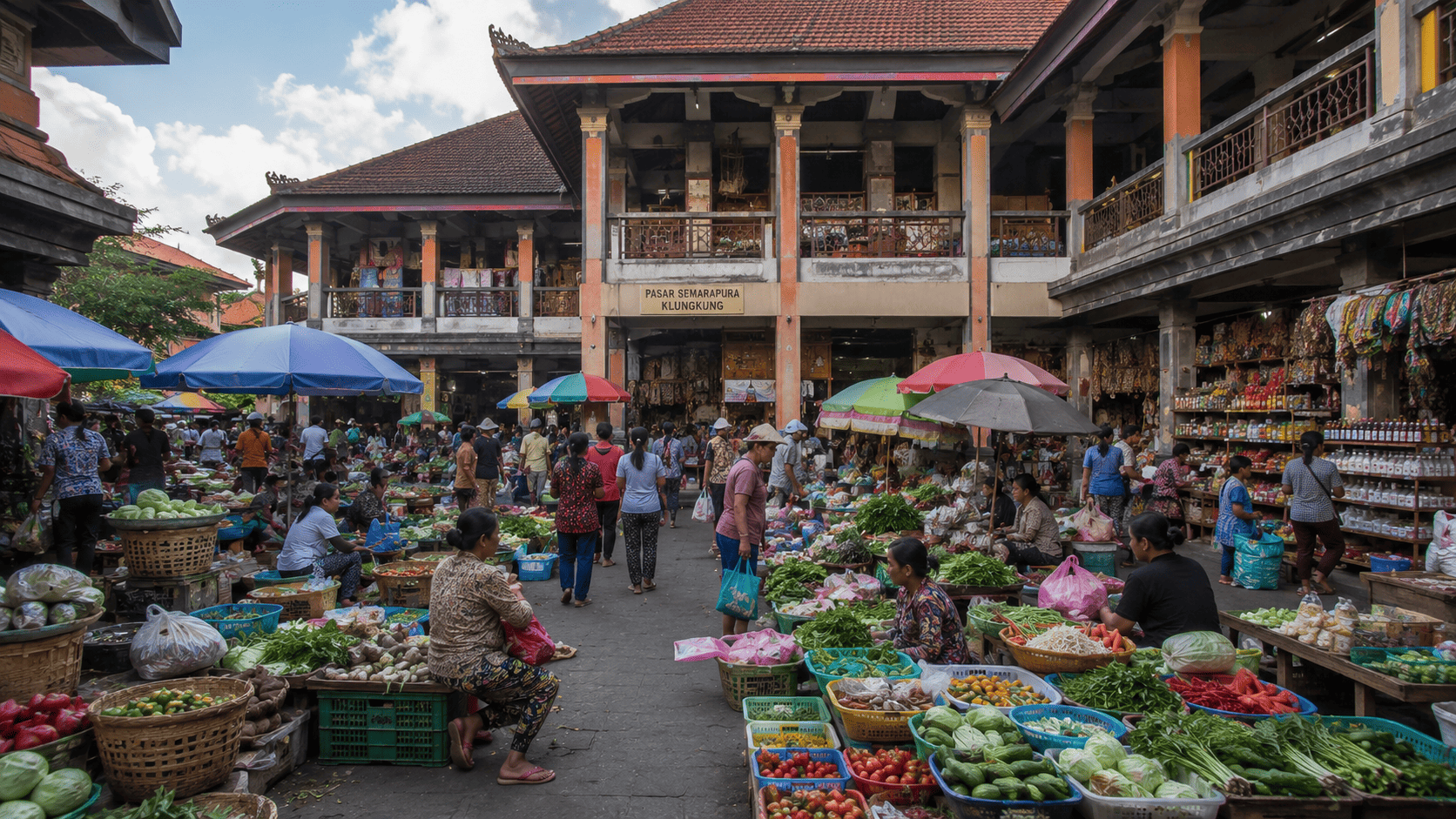
📍 Central Semarapura, walking distance from Kertha Gosa
💰 Free to enter; produce and goods priced by vendors
🕐 Busiest in the early morning from around 6 AM onward
👥 Best For Travellers wanting an authentic local market experience off the tourist circuit
✨ What Makes It Special A working daily market used primarily by locals, not designed for tourists
Pasar Semarapura is the kind of market that reminds you how everyday Bali actually functions. Vendors sell fresh produce, dried spices, traditional textiles including Klungkung’s famous endek cloth, and local food from stalls running along the ground floor.
The upper floors carry fabrics and clothing at honest prices, and the energy in the early morning before the heat sets in and before most tourists are awake is genuinely lively. It pairs perfectly with a morning visit to Kertha Gosa next door.
5. Monumen Puputan Klungkung
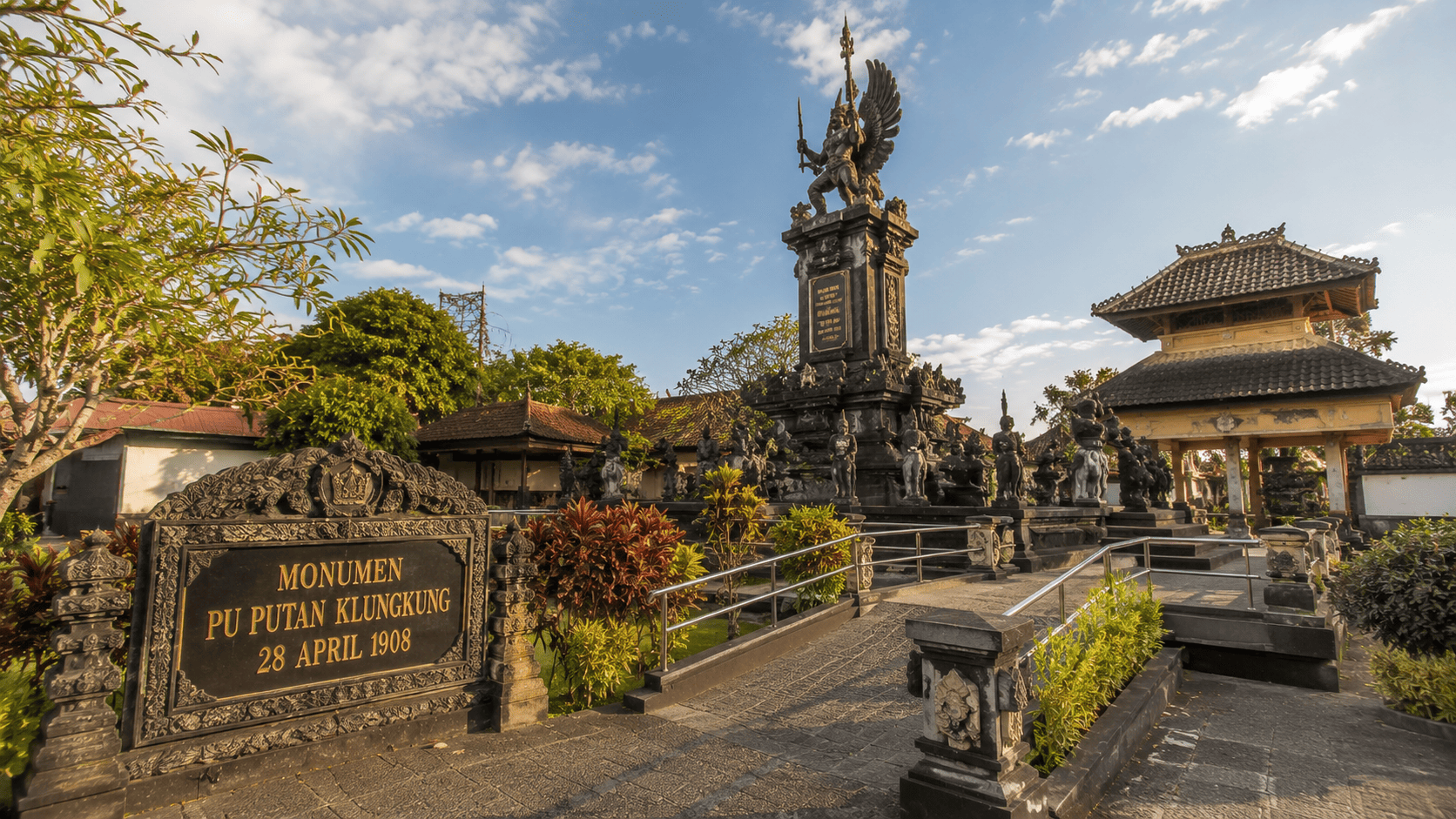
📍 Central Semarapura, beside Kertha Gosa
💰 Small admission; includes diorama museum access
🕐 08:00 – 17:00 daily
👥 Best For History-minded travellers and those wanting to understand Bali’s colonial past
✨ What Makes It Special Commemorates one of the most significant acts of collective resistance in Balinese history
The Puputan of 1908 is one of the most profound events in Balinese history. Rather than surrender to Dutch colonial forces, the royal court of Klungkung chose mass ritual sacrifice. The monument and diorama museum at its base tell this story with real gravity.
Understanding the Puputan changes how you see Klungkung and Bali more broadly. The regency’s pride in this history is visible throughout Semarapura in street names, in artwork, and in the quiet dignity of the town itself. This is not a cheerful tourist attraction but a meaningful one.
Explore Klungkung Further with SatuSatu
Klungkung is one of Bali’s most rewarding destinations for travellers who enjoy cultural depth, and SatuSatu makes building the rest of your island trip around it completely seamless.
SatuSatu is a Bali travel platform that brings together transport, cultural experiences, and curated activities in one place, all bookable directly on SatuSatu.com with support for local payment methods including BCA, Mandiri, OVO, DANA, credit cards, and more.
Getting to East Bali is easiest when you start right, and SatuSatu’s Airport Transfer offers fixed-price, same-day booking from Ngurah Rai with no negotiating required on arrival.
For exploring Klungkung and the wider East Bali region in a single day, SatuSatu’s Exclusive Car Charter gives you a dedicated local driver and full scheduling flexibility, perfect for moving between Semarapura, Goa Lawah, and the coast at your own pace.
After a day steeped in Balinese history and culture, the Kecak Fire Dance at Uluwatu makes an unforgettable evening experience one of Bali’s most iconic sunset performances at a temple cliff overlooking the sea.

And if you want to do more across Bali without the hassle of planning each activity separately, the SatuSatu Bali All-Access Pass is the smartest way to stretch your trip further.
Choose from a 1-day pass at $59.95 (IDR 999K), a 2-day pass at $104.95 (IDR 1.799M), or a 3-day pass at $144.95 (IDR 2.499M), and unlock access to 50+ top Bali experiences spanning destinations across the island, from the Kecak Fire Dance at Uluwatu to snorkeling in Padang Bai and wellness and spa experiences across Bali.
Every pass includes a free eSIM and a dedicated Bali concierge to handle all the planning for you, saving you up to 60% compared to booking individually, with 90-day validity from purchase for maximum flexibility.
FAQ about Klungkung Bali
Is Klungkung Bali worth visiting?
Absolutely. Klungkung is one of Bali’s most culturally rich regencies and one of its most undervisited. The combination of royal history, traditional painting, active temples, and a genuine local market makes it a standout for travellers looking beyond the obvious.
How far is Klungkung from Ubud and Kuta?
Klungkung’s capital Semarapura is roughly 40 kilometres from Ubud (about 1 hour by car) and around 45 kilometres from Kuta (around 1 to 1.5 hours depending on traffic).
What is Klungkung most famous for?
Klungkung is most known for the Kertha Gosa Pavilion and its exquisite Kamasan ceiling paintings, the Puputan monument commemorating Bali’s royal resistance against Dutch colonisation, and as the artistic home of traditional Wayang Kamasan painting.
What is the best time of year to visit Klungkung?
The dry season from April to October offers the most reliable weather for sightseeing. The regency is worth visiting year-round, and being inland means it is less affected by beach weather conditions.
Can I combine Klungkung with other East Bali attractions?
Yes, easily. Klungkung sits conveniently between Ubud and the far east of the island, making it a natural stop on a full East Bali day that also includes Lempuyang Temple, Tirta Gangga Water Palace, or the beaches around Padang Bai.