There is a moment on a cycling tour through Bali’s rice terraces when the only sounds are your tires on a narrow village lane, water running through irrigation channels, and a rooster somewhere in the distance.
No traffic, no tour buses, just you moving through the kind of countryside that makes people fall permanently in love with this island. Biking in Bali is one of the most rewarding ways to experience it, and the variety on offer goes well beyond a single downhill run.
Whether you want a gentle morning pedal through paddy fields, a volcanic mountain descent with views over a crater lake, or a multi-day road cycling adventure through the island’s interior, Bali has a route for exactly that.
The team at SatuSatu put together this guide so you know where to ride, what to expect, and how to plan it right.
Why Biking in Bali Is Worth Your Time
Cycling gets you closer to Bali than almost any other form of transport. Village lanes that are inaccessible to cars open up on two wheels. You can stop when a temple ceremony catches your attention, follow the sound of gamelan music down a back road, or pull over when a farmer waves you in for coffee.
Guided cycling tours in Bali are particularly good at delivering this kind of encounter because local guides have relationships with the villages they ride through, which translates into experiences that feel genuinely authentic rather than staged.
The island’s geography also makes for exceptional riding. The volcanic central highlands create a natural opportunity for mostly-downhill tours: you are driven to elevation, then you ride back down through the landscape, which keeps the effort manageable for riders of almost any fitness level.
For those who want more of a challenge, the eastern coast, mountain trails around Mount Batur, and the UNESCO-listed Jatiluwih rice terraces all offer routes that test your legs and reward you with extraordinary scenery.
The Best Cycling Routes in Bali
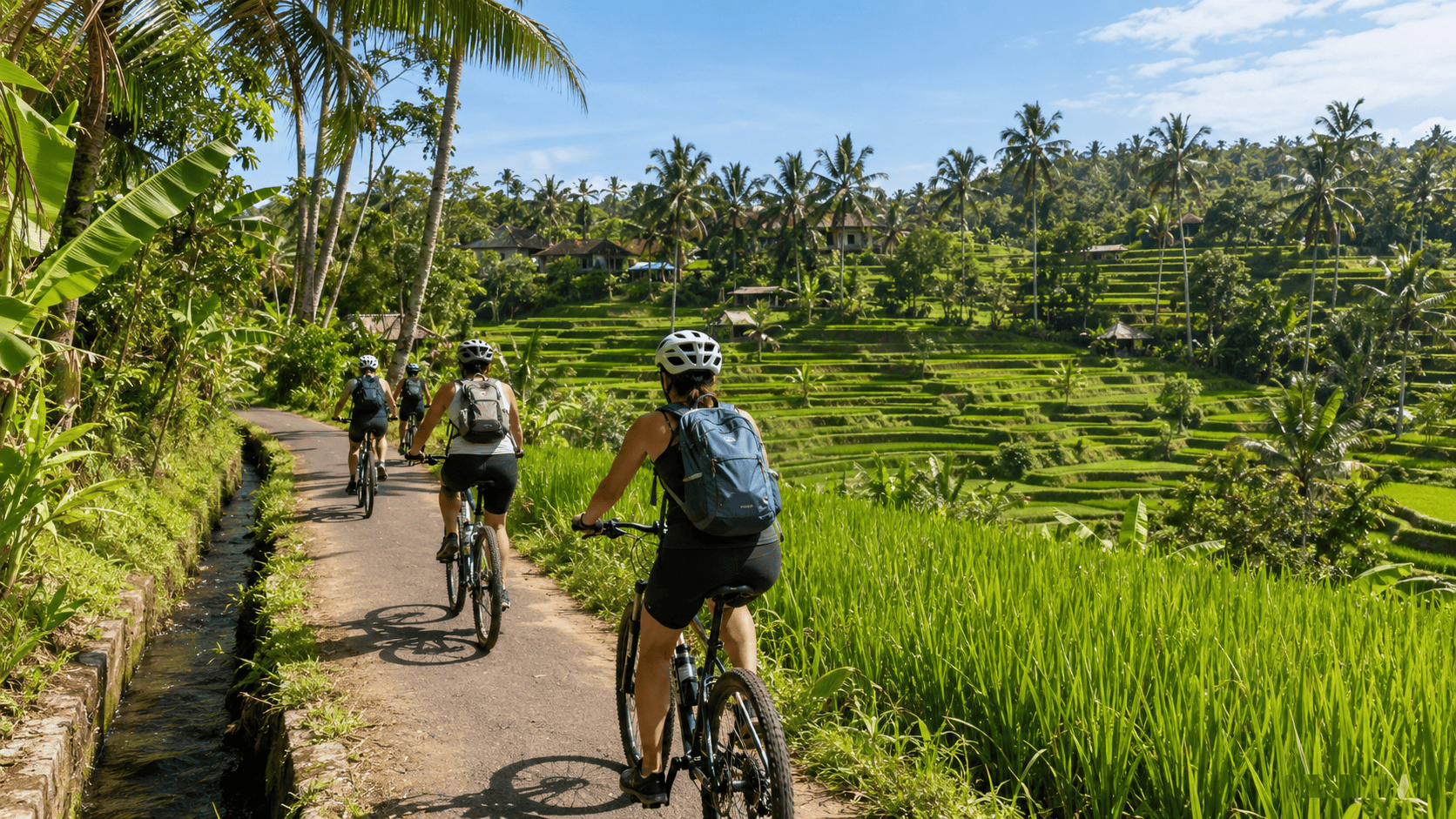
Kintamani Downhill: The Classic for Good Reason
The most popular cycling tour in Bali starts near the rim of the Mount Batur volcano in the Kintamani highlands, where cool mountain air sits at altitude above Lake Batur.
From the drop point, the route descends through orange groves, coffee plantations, and traditional Balinese villages, with regular stops at temples, local compounds, and occasionally coffee tasting stations along the route.
The tour is almost entirely downhill and is widely described as suitable for beginners. Guided tours typically last 3 to 4 hours and prices generally start from around $35 to $50 USD, including the bike, helmet, guide, and hotel transfer.
Ubud Rice Terrace Rides: Paddy Fields and Village Life
The area around Ubud offers some of Bali’s most rewarding cycling, not because of dramatic elevation changes but because of what you pass through.
Bike tours from Ubud weave through bamboo forests, past rice paddies, along irrigation canals built using Bali’s ancient Subak water management system, and through small craft villages where you might encounter woodcarvers, painters, or silver workers at their benches.
The Tegallalang Rice Terrace loop is a common route, covering around 10 to 12 kilometers on quiet backroads before finishing in Ubud. Tours are well-suited to families and riders without much cycling experience. Prices typically start around $27 USD for tours with Ubud pickup.
Jatiluwih: UNESCO Terraces and Rolling Highland Roads
Jatiluwih in the Tabanan highlands is a UNESCO World Heritage site and one of Bali’s most visually striking destinations for cycling. The rice terraces here spread across the hillsides in concentric bands of green, shaped by centuries of the Subak communal irrigation tradition.
Cycling routes through Jatiluwih involve more rolling hills than the Kintamani descent, making them better suited to riders with some fitness. The reward is scenery that feels expansive and almost otherworldly, especially in the early morning before tour vehicles arrive.
Mount Batur Off-Road: Lava Flats and Volcanic Trails
For riders who want something more adventurous, the volcanic terrain around Mount Batur offers mountain biking across lava fields, along the base of the crater cone, and through the landscape left behind by the volcano’s most recent eruptions.
This type of ride is better suited to cyclists with some off-road experience, as the lava flats and gravel surfaces require more bike-handling confidence than a paved village lane.
Views across the caldera and Lake Batur are the reward for the rougher terrain. Tours in this area typically last 3 to 4 hours with a support vehicle available if needed.
Canggu Village Rides: Casual and Close to the Action
For travelers based in Canggu who want a shorter, more relaxed experience, casual cycling tours through the rice paddies and village lanes surrounding Canggu and Pererenan offer a gentle introduction to biking in Bali. Routes are mostly flat and last 1 to 2 hours, with plenty of stops for fresh coconuts or coffee.
These are well-suited to beginners, families, or anyone who wants to see the local rice field landscape without committing to a full-day tour. Prices are typically the most affordable of any guided ride in Bali, starting from around $20 to $35 USD.
East Bali: Sidemen, Candidasa, and Coastal Roads
The eastern side of Bali is underexplored by cyclists and offers some of the most beautiful terrain on the island. Sidemen Valley, southeast of Ubud, runs below the dramatic slopes of Mount Agung and delivers sweeping rice terrace views with very few other tourists.
Routes through Putung Village involve more rugged terrain with several downhill trails finishing near Pantai Perasi, a quiet beach on the Karangasem coastline. Candidasa, further east, is flatter and easier, with most hotels in the area offering bikes for guests to borrow and local guides available for rice field loops.
Practical Tips for Biking in Bali
The best time for biking in Bali is during the dry season from April to October, when rainfall is minimal and the roads are in better condition. Morning starts are strongly recommended regardless of season: the air is cooler, traffic is lighter, and the light on the rice terraces in the first hour after sunrise is extraordinary.
A standard guided tour provides a mountain bike or hybrid bicycle, a helmet, a guide, hotel transfer, and usually a traditional Balinese lunch. Some operators now offer e-bikes, which are increasingly popular for riders who want the experience without the physical effort on hills.
If you are cycling independently, bring sun protection, a light rain jacket for the wet season, and an offline map since signal can be unreliable on mountain routes.
Explore Bali Further with SatuSatu
Biking in Bali is one of the best ways to connect with the island, and SatuSatu makes it just as easy to plan everything around it.
SatuSatu is a Bali travel platform that brings together transport, cultural experiences, and curated activities in one place, all bookable directly on SatuSatu.com with support for local payment methods including BCA, Mandiri, OVO, DANA, credit cards, and more.
Whether you are heading to a cycling tour pick-up point or landing at Ngurah Rai for the first time, SatuSatu’s Airport Transfer offers fixed pricing, same-day booking, and a reliable pickup that sets the right tone for the trip ahead.
On days when you want to cover more distance without a bike under you, SatuSatu’s Exclusive Car Charter pairs you with a dedicated local driver and complete schedule freedom, ideal for combining a cycling region with temple visits, a waterfall stop, or a long lunch somewhere remote.
A cycling day is a fantastic complement to a cultural evening, and the sunset Kecak Fire Dance at Uluwatu is Bali’s most powerful live cultural performance: the Ramayana told through chant and fire on a clifftop stage above the ocean.

And if you want to do more across Bali without the hassle of planning each activity separately, the SatuSatu Bali All-Access Pass is the smartest way to stretch your trip further.
Choose from a 1-day pass at $59.95 (IDR 999K), a 2-day pass at $104.95 (IDR 1.799M), or a 3-day pass at $144.95 (IDR 2.499M), and unlock access to 50+ top Bali experiences spanning destinations across the island, from the Kecak Fire Dance at Uluwatu to snorkeling in Padang Bai and wellness and spa experiences across Bali.
Every pass includes a free eSIM and a dedicated Bali concierge to handle all the planning for you, saving you up to 60% compared to booking individually, with 90-day validity from purchase for maximum flexibility.
FAQ about Biking in Bali
Is biking in Bali suitable for beginners?
Yes. Most guided cycling tours in Bali are beginner-friendly. Popular routes like Kintamani downhill and Ubud rice terrace loops are mostly downhill or flat, with support vehicles included.
How much does a cycling tour in Bali cost?
Casual Canggu rides usually cost around $20–35 USD, while Kintamani downhill tours range from $35–50 USD. Mountain bike and multi-day tours can cost $50–70+ USD. Most tours include bikes, helmets, guides, and hotel transfers.
What is the best area for cycling in Bali?
Ubud and Kintamani are the most popular for scenery and tour options. Jatiluwih is ideal for UNESCO rice terrace views, while Sidemen offers quieter routes.
When is the best time for biking in Bali?
The dry season from April to October is best. Morning rides between 7am and 9am are recommended for cooler weather and lighter traffic.
Do I need to bring my own bike to Bali?
No. Guided tours provide bikes and helmets, and many operators also offer e-bikes. Bicycle rentals are easy to find across Bali.